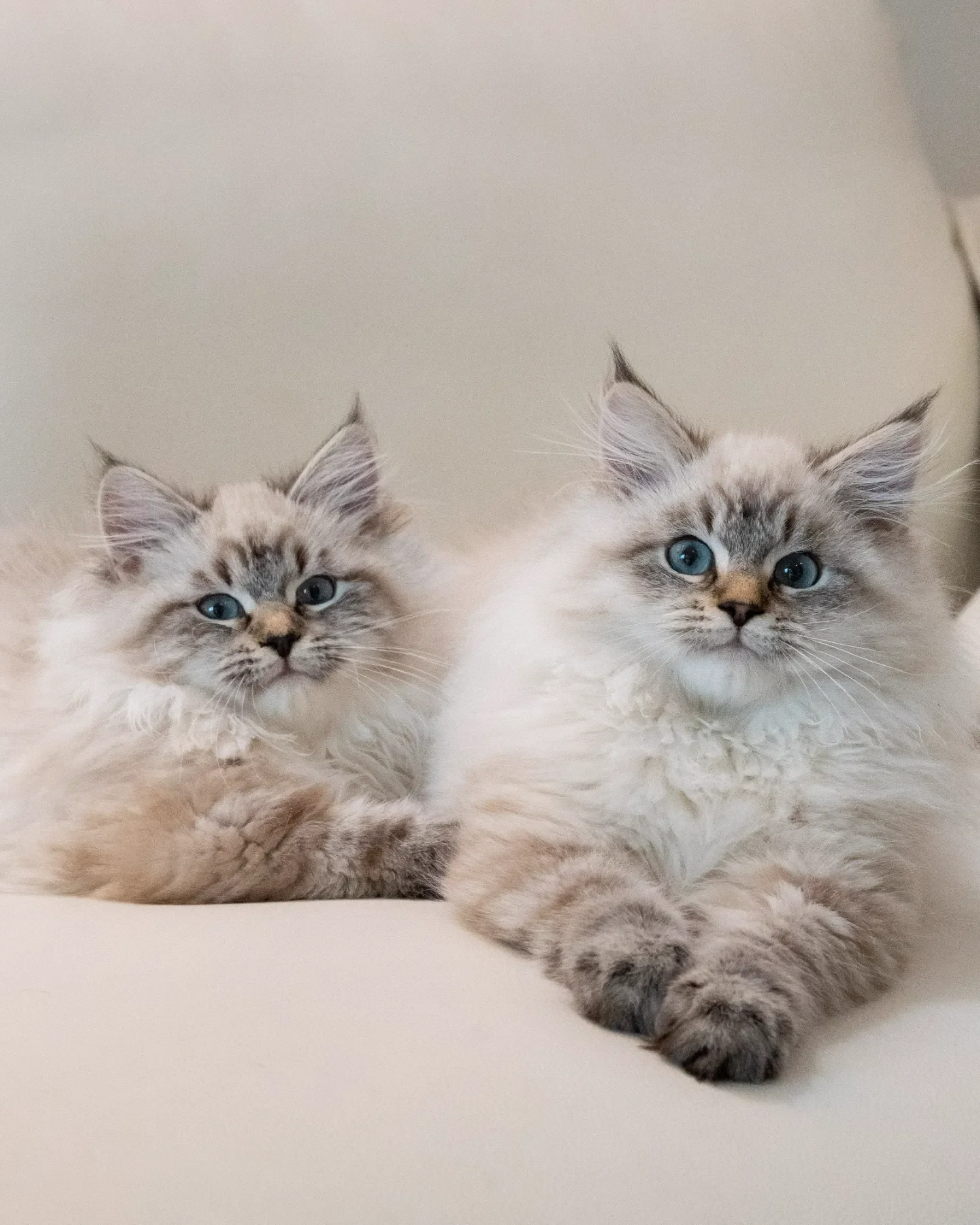
In short: No cat is truly hypoallergenic, but the Siberian is the breed with the best track record for allergy-prone homes. People react mainly to a protein called Fel d 1, not to fur, and many Siberians make less of it than most cats. The key word is many. Levels vary from cat to cat, so the only way to know how you will feel is to spend real time with the cats before you decide.
What people with cat allergies actually react to
Most people with a cat allergy react to a protein called Fel d 1. Cats make it in their saliva and skin glands, then spread it over their coat when they groom. From there it sticks to fur, clothes, sofas and curtains, and it can hang in the air for a long time.
That is why a short-haired cat can still set off sneezing, and why a big fluffy Siberian does not have to. The fur is only the carrier. What matters is how much Fel d 1 the cat makes in the first place.
Why Siberians are different
Siberians have been tested for Fel d 1 more than any other breed. In data from over 300 Siberians collected by the breeder group Siberian Research, about half had clearly lower Fel d 1 levels than ordinary cats, and a small number had very low levels. A few tested high. The same group also reports gene variations linked to Fel d 1 in Siberians that they did not find in other breeds, which may help explain the difference.
So the honest summary is simple: a Siberian gives you better odds, not a guarantee.
What about the Neva Masquerade?
The Neva Masquerade is the colourpoint variety of the Siberian, with the same coat, the same temperament and those icy blue eyes. Everything in this guide applies to Neva Masquerades too. Colour does not change the basic picture. The individual cat does.
What makes one cat produce more than another
Sex. Unneutered males make the most Fel d 1. Females and neutered males make less.
Age. Kittens make less Fel d 1 than adult cats, so a reaction can grow a little as a kitten matures.
Bloodline. Within the breed, some lines tend to produce less than others. Low allergen parents are more likely to have low allergen kittens, though not every kitten follows its parents.
The individual cat. Two kittens from the same litter can still be different.
A note from John: I'm allergic too
Here's something many people don't expect. I'm allergic to cats myself, and to dust mites. So everything in this guide is something I live with every day.
In Singapore, dust mites are one of the most common allergy triggers. A lot of people who sneeze around cats are actually reacting to dust mites, or to both. Shed fur on the floor collects household dust, so when it gets kicked up into the air, you breathe in both. If you're not sure what you're reacting to, an allergy test at a clinic can tell you.
At the cattery and at home, this is what we do:
Run air purifiers and keep the space well ventilated.
Vacuum every day and mop often.
Comb the cats regularly and bathe them. A good bath and blow dry clears out a lot of the loose undercoat, so there is less fur on the cat and less fur floating around the home, and the cat needs less grooming afterwards. The allergen on the coat itself builds back up as the cat keeps grooming, so regular combing and baths work best together.
Wash our hands after the cats lick us, or after we brush their teeth, and never touch our face before we do. Cat saliva carries the most allergen, so this one matters most.
None of this makes allergies disappear, but together these habits make living with cats very comfortable for me.
How to test before you commit
Spend real time with the cats. Book a private viewing and stay long enough to notice how you feel. Sit with the kittens, let them climb on you, and touch your face afterwards. Some reactions show up hours later, so pay attention that evening too.
Bring the person who is allergic. It sounds obvious, but we often meet families where the allergic person stayed home. Their reaction is the one that counts.
Remember that kittens make less Fel d 1 than adults. A good visit is a very promising sign, but not a promise for the next fifteen years.
Speak to a doctor if the allergy is strong. If anyone at home has asthma or a severe reaction to cats, please check with a doctor or allergist before bringing any cat home. They can tell you how sensitive you are and whether a cat is a sensible idea at all.
Living with a Siberian when someone has allergies
On top of the habits above, a few more small things help:
Keep the bedroom of the allergic person cat-free.
Wash bedding, throws and cushion covers every week.
Let someone who is not allergic scoop the litter box and do most of the brushing.
Sterilise your cat at the age your vet recommends.
The good news for Singapore homes is that Siberians carry a lighter coat here all year round, so they do not go through the heavy seasonal shedding seen in colder countries.
What we have seen at Fluffydolls
A lot of the families who ask us about Siberians have someone at home who reacts to cats. We have seen allergy-prone households take home a Siberian with no rashes or itching, while still reacting to other breeds. We have also seen how much reactions vary from person to person, which is exactly why we never promise that any cat is allergy-free.
Our Traditional and Neva Masquerade Siberians come from health-tested European parents, and you will see the results at your viewing. You can read more about the breed on our Siberian page, or see how they compare with other breeds in our guide to the best pedigree breeds for Singapore homes.
Frequently asked questions
Are Siberian cats hypoallergenic?
No cat is truly hypoallergenic. But many Siberians make less Fel d 1, the main cat allergen, so a lot of allergy-prone people find them much easier to live with than other breeds.
Is the Neva Masquerade hypoallergenic?
The Neva Masquerade is a colourpoint Siberian, so the same applies. Many make less Fel d 1 than other breeds, but it varies from cat to cat.
Is a boy or a girl better for allergies?
Unneutered males make the most Fel d 1. Females and neutered males make less, so once your kitten is sterilised the difference between boys and girls is much smaller.
Can I tell if I will react before I buy?
The best test is time with the cats. Book a private viewing, bring the person who is allergic, and notice how they feel during the visit and later that day.
How much is a Siberian kitten in Singapore?
Our Siberian and Neva Masquerade kittens are currently S$7,800 to S$8,800, depending on colour and pattern.
Ready to meet them?
There is never any pressure. If you or someone at home reacts to cats, message us on WhatsApp to book a private viewing and spend some time with our Siberians before you decide, or see the Siberian kittens available now.

About the author
John is the founder of Fluffydolls Cattery in Singapore. He grew up on a farm surrounded by animals and started out as a breeder before becoming an importer. Today he and Grace work with a small circle of ethical European home breeders to raise healthy, well-socialised pedigree kittens, and they stay involved in every kitten's life long after go-home day.
About Fluffydolls Cattery:
A home-raised pedigree cattery in Singapore (AVS Licence AS22L00066), raising kittens from trusted European breeders for temperament, health and lifelong support.